 13128872179
  2419493733
  Telegram:ukassignment021
Organisational Culture组织文化
Paula O’Brien
Senior Lecturer
Aims目标是
What is organisational culture什么是组织文化
How does it impacts on the business不同的方法考虑组织文化
Different approach to thinking about organisational culture批评的“文化的实用主义者/机械视图”
Criticisms of the ‘functionalist/mechanistic view of culture’将文化视为一种组织变量它如何影响业务
Viewing culture as an organisational variable将文化视为一种组织变量
Consider its influence on employee morale and retention of employees/performance考虑其影响员工士气和员工保留/性能
The concept of organizational culture has assumed huge importance in the last fifteen years 组织文化的概念在过去15年中认为巨大的重要性
Previously, analysts and theorists it seemed believed that it was enough to understand an organization's strategy and its structure in order to have a good explanation for what it did
later on, they began to see that much more was going on in organizations than just developing new products and services and paying attention to structure (hierarchy and power).
Culture is a way to study organisations that offers a counterpoint to the dominant rationalist view (Pondy & Mitroff 1979)
Drawing attention away from the technical and instrumental aspects of organisations towards their social & symbolic dimensions (Morgan et al 1983; Pettigrew 1979)
Cultural theorists would consider previous views of the nature of organisations as quite narrow
They began to see that much more was going on in organisations than just developing new products/services and paying attention to hierarchy and power.
Organisational culture often defined as shared values that hold the organisation together, is seen as a critical aspect of ORG’L CHANGE
Because of its persistency (ie resistance to change)
Functionalist Approach to culture
Is where culture is seen as a tool/strategy which is management driven, where there is change in core values and thus successful organisational transformation
Functionalist approach sees org culture as a powerful lever
Objective is to align culture with strategy and structure of the company
Critics of functionalist approach to culture
These critics see culture as a result of collective sense-making & action over time
As opposed to
An episodic intervention by management
Culture is ignored in leadership theories (Alvesson)
Mats Alveson (2002) - Understanding Organizational Culture f
He argues that leadership often is handled like a straightforward concept, it actually is not.
Example: studies of leadership in the early/ mid-nineties seemed to ignore the study of context and culture in order to try and set up universal rules for leadership
Example: Organisational theory of leadership
is flawed if we do not consider the context or the culture of the organisation
Thus, avoiding a universal understanding or universal rules for organisations.
Mats Alvesson
According to Alveson this quite ‘functionalistic approach’ to research has resulted in a wide array of studies that tend to neglect the communication between subordinates and leaders and only examine the actions of the leaders.
Alveson’s point is that leadership is not researched correctly, if the context and culture of the organization at hand is not included in the study !!
CULTURE IS IMPORTANT WE CANNOT SIMPLY EXCLUDE IT!
Criticism of the functionalistic approach in organizational culture studies
Alveson & many of the sociologists in the field have argued that the ‘functionalistic view on culture’ is simplistic.
‘Social constructivists’ argue that the phenomenon of culture is much more complex than the functionalists describe it
Schultz argues that ‘the positivistic scientific method’(functionalist) is not applicable in the study of organizational culture.
Schultz - …. an organization does not have a culture, IT IS THE CULTURE. (previous studies simply saw culture as an organisational variable)
IT IS NOT SOMETHING SEPARATE
Researchers began to use the concept of culture from anthropology to understand some of these basic differences
Why anthropology?
They studied culture in different settings, often spend long periods of time in the ‘field of study’. Used ethnography approach to data collection to achieve a rich and detailed account of a culture
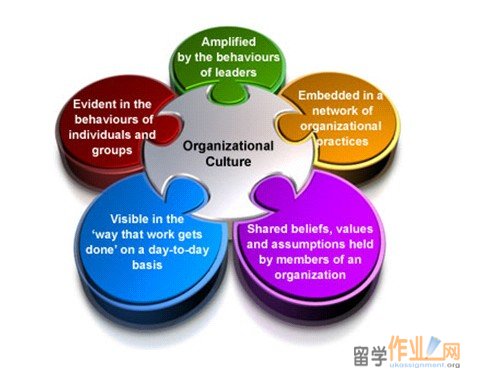
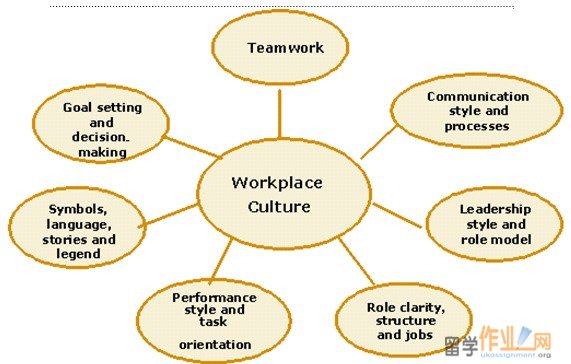
What is organisational culture
It is learned behaviour
It is a way of thinking
It is shared by all members
New employees must learn it (and partially accept)
It can include customs & habits
It can include attitudes to discipline
It can include the value placed on certain work
Andrew Brown
Andrew Brown
Example: Great Sweets Ltd
Value was placed on the work of production and not on the work of packing
Production was seen as more important
(this might be because production was seen as more skilled)
Company X
Has created an environment where the employees feel free and happy to work and where there is a sense of belongingness and commitment .
It is very important that the employees know that they will be looked after, and that is the starting point for high performance.
It’s organisational culture is characterized by:-
It’s organisational culture is characterized by:-
a strong feeling of family,
openness and trust,
respect for everybody and the spirit
has created numerous mechanisms for ‘employee participation’ in various activities and there is a feeling of being taken care of by the organization.
It is performance driven!
Great Sweets Ltd
The case study analysis you conducted previously as students incorporated aspects of organisational cultural changes as well as technical changes to the workplace
Eg creating a system where the employees’ voices were heard, their concerns were responded to by managers
Eg reduce high scrap by engaging the employees more in decision making and using their knowledge
Stories
We have got one of those new managers again. They won’t last very long. I can remember the last one we had, full of ideas and promises that things would change. They only lasted 6 months before they left..’
2 opposing views of organisational culture:
1) as a managerial tool – building strong culture is seen by these theorists as important job of managers
2) as collective sense making over which managers have very little control
Reading
Alveson, Mats; Understanding organizational culture; 2002, London: Sage social constructionist view of culture)
Brown, A, ( 1998 ) Organisational Culture
Morgan, Gareth; Images of organization; 1997, London: Sage
Schein, Edgar; Organizational Culture; 1988, Sloan school of management (functionalist view of culture!)